Category: Search and Visibility
Reading time: approximately 6 minutes
The question comes up constantly now. Someone reads that AI is changing everything, sees their traffic dropping, and concludes that SEO must be finished. It is an understandable reaction, and it is worth a straight answer.
SEO is not dead. But the version of SEO that some businesses have been doing is less effective than it used to be, and the gap between businesses that are adapting and those that are not is widening.
Here is the full picture.
Is SEO dead or evolving in 2026?
Evolving. Definitively.
Google is still the most used search tool on the planet by a significant margin. Billions of searches happen every day. Businesses are still being found through those searches, and the ones with well-optimised sites are still benefiting from that traffic.
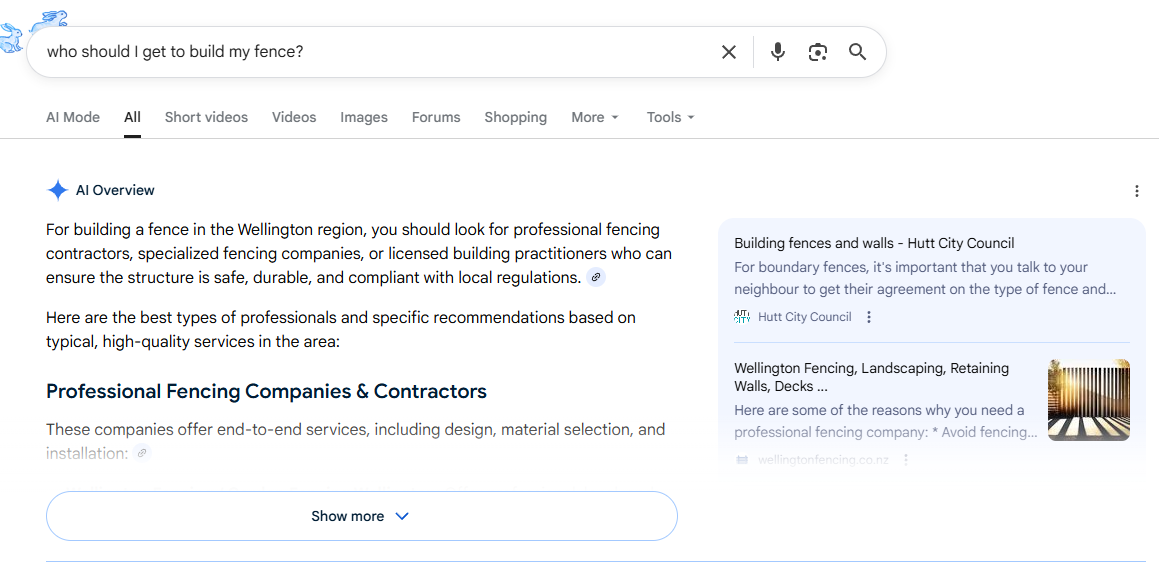
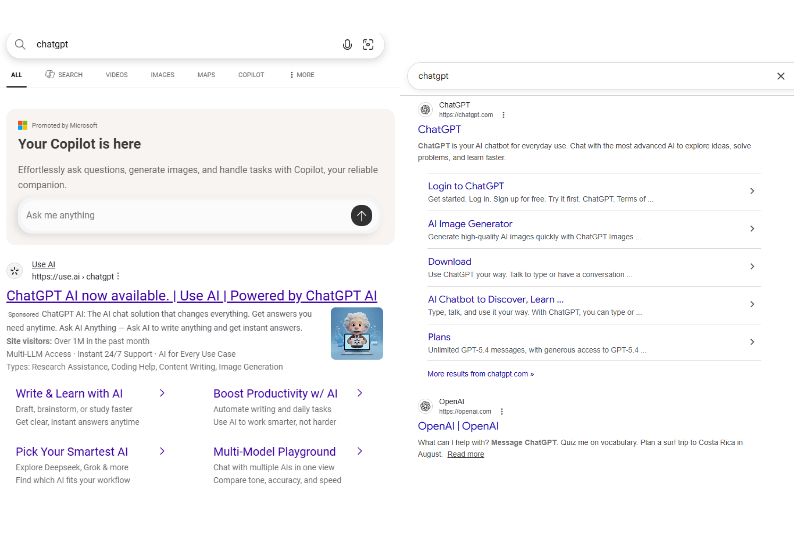
What has changed is that Google itself has changed. AI Overviews now answer questions directly on the results page. The traditional list of ten blue links is no longer the first thing many users see. And standalone AI tools like ChatGPT and Perplexity are handling searches that would previously have gone to Google entirely.
So the practice of optimising for search is not dead. The definition of what you are optimising for has expanded.
Is SEO dying out?
Not dying — shifting. The businesses saying SEO is dying are often the ones who were doing a narrow version of it and have seen that narrow version become less effective.
Old-style SEO was largely about keywords. Use the right phrase enough times on the page, get some links pointing at your site, and you would rank. That approach has been declining for years as Google has become more sophisticated about understanding content quality and intent rather than just matching keywords.
Modern SEO is about demonstrating genuine expertise and relevance to both search engines and AI tools. It involves the technical structure of your site, the quality and usefulness of your content, the credibility signals your business carries across the web, and how people behave when they land on your site. Those things are not dying. If anything, they matter more than ever.
Will SEO be replaced by AI?
No — but AI is changing how SEO works, and that is actually good news for small businesses.
Traditional SEO required getting high-authority websites to link back to yours. For a small business trying to earn links from major publications, that was genuinely hard, and it is still how a lot of head-term ranking works.
What changes the odds is how AI answers get assembled. Google has explained that both AI Overviews and AI Mode use “query fan-out” — rather than answering one query, they issue multiple related searches across subtopics and build the response from all of them. Google’s own example: “how to fix a lawn that’s full of weeds” fans out into best herbicides, removing weeds without chemicals, and preventing weeds in future. Google states this lets them show a wider and more diverse set of links than classic search does.
That is the genuine opening for a small business. You do not have to outrank a national competitor on the head term. You have to be the best answer to one of the specific sub-questions the fan-out generates — which a Nelson business with real first-hand knowledge can absolutely be.
One warning that comes attached to it, straight from Google: building a separate thin page for every query variation to game this is scaled content abuse, and it is a named spam policy. Cover the topic properly because your customers need it covered. Google’s systems match relevance without needing one page per phrasing.
Alongside that, authentic third-party discussion genuinely does feed the answer layer — Google confirms AI features surface what is being said about businesses across blogs, videos and forums. The line is authenticity. Earned mentions and real reviews count; seeded or purchased ones are money burnt, because the same spam systems that police Search feed the AI features.
The businesses that understand this are using AI as an accelerant rather than treating it as a threat.
Does SEO still work for small businesses?
Yes, and local SEO in particular is as effective as it has ever been for small businesses.
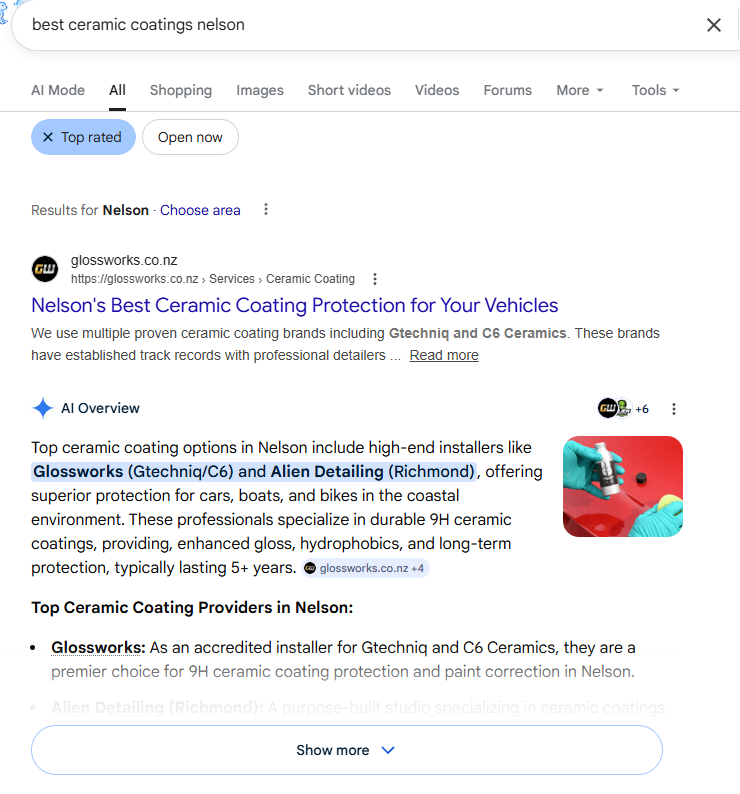
When someone searches for a tradie, a bookkeeper, or a specific service in their area, Google still serves local results based on proximity, relevance, and credibility signals. A small business with a well-optimised site, a complete Google Business Profile, and genuine reviews is very competitive in local search, regardless of the size of its competitors.
The four pillars of SEO — authority, content, technical structure, and user behaviour — have not changed. What has changed is that there is now a fifth layer, AI search visibility, that rewards the same fundamentals applied slightly differently. A business that is doing proper SEO is already doing most of what it needs to do for AI search. The additional steps are meaningful but not a complete reinvention.
Is SEO worth it in 2026?
Yes, and the comparison to paid advertising makes this clear.
Google Ads and social media advertising can generate leads quickly. But they stop the moment you stop paying. The day your ad budget runs out, so does your visibility. There is no compounding effect, no long-term asset being built.
SEO works differently. A site that ranks well today, built on solid foundations, keeps working. The content you publish this month can still be driving enquiries in two years. Done properly, SEO compounds over time — each improvement builds on the last, and the value accumulates rather than resetting.
For a small business with a limited marketing budget, that compounding effect is significant. It is the difference between renting visibility and owning it.
That does not mean advertising has no role. Google Ads can be useful for short-term visibility while SEO is building momentum, or for specific campaigns where immediate reach matters. But treating advertising as a replacement for SEO means you are permanently on the treadmill — the moment you step off, you disappear.
What is the future of SEO?
The direction is clear even if the specific details keep shifting.
Search is becoming less about typed keyword phrases and more about natural language questions. It is becoming less about clicking through to websites and more about getting answers directly from AI. It is becoming less about a single platform and more about a consistent presence across multiple discovery channels.
The businesses that will do well in this environment are the ones with sites that are fast, clearly structured, and full of genuinely useful content written in plain language. The ones with consistent profiles across directories and review platforms, including a well-managed Google Business Profile. The ones that collect genuine reviews from real customers. The ones that are easy for both humans and machines to understand.
None of that is complicated. It is the same thing good SEO has always been about, applied to a landscape that now includes AI tools alongside traditional search. The businesses treating that as a crisis are missing that the fundamentals have not changed — only the places where those fundamentals need to be applied. We cover what GEO and AEO actually mean in practice in a dedicated guide.
Is AI good for SEO?
Yes — if you use it the right way.
AI tools can help with content research, identifying questions your customers are asking, structuring pages clearly, and maintaining consistency across a large site. Used well, AI accelerates good SEO work.
What it cannot do is replace the substance. AI-generated content that is generic, repetitive, or indistinguishable from a thousand other pages on the same topic will not perform well in search. The businesses doing best with AI-assisted SEO are the ones using it as a tool to work faster, while still bringing genuine expertise, specific knowledge, and real customer understanding to the content itself.
The bar for useful content has risen, not fallen. That is good news for businesses that actually know what they are doing.
Want to understand how AI search works and what it means for your business specifically? Read our guide: What is AI search? A plain-English guide for NZ small businesses.
Local SEO is one of the most effective areas to focus on in 2026. Read our guide: How do I get my business found online in Nelson?
Or if you want to know what your site’s current SEO foundations look like:
Published by Pounamu Creative, Nelson NZ
Built to be found
Frequently asked questions
- Is SEO dead in 2026?
- No. Search behaviour changed — AI summaries and fewer clicks — but people still search and businesses still win with relevant, fast, trustworthy pages.
- Is SEO still worth it compared to paid ads?
- Often yes for sustainable cost per lead, but many businesses use both. SEO compounds; ads stop when the budget stops.
- What kind of SEO still works for local NZ businesses?
- Strong Google Business Profile, local landing pages, reviews, technical health, and content that answers real customer questions — including in AI-friendly form.