Category: AI and Search
Reading time: approximately 9 minutes
Somewhere between AI search becoming real and AI search becoming a product category, a lot of things got invented and sold that do not work.
Google published a list. It sits inside its guidance on optimising for generative AI features, it names specific tactics, and it says plainly that they are not needed. Most of those tactics are still being sold in New Zealand right now, at real prices, to businesses who have no way of checking.
This guide goes through that list. It also includes an uncomfortable admission, which is that until September 2026 this website was making one of these claims itself.
Why does this matter more than a normal SEO myth?
Because AI visibility is unusually hard to check.
If somebody sells you a first-page Google ranking, you can search and see whether it happened. If somebody sells you “AI search optimisation”, the results are personalised, they vary between tools, they vary between AI Overviews and AI Mode, and they change between one query and the next. Almost nothing is falsifiable from the outside.
That combination — high anxiety, low verifiability — is exactly the environment where expensive nonsense thrives. So the sensible move is to work from what the search engine has actually published rather than what a proposal asserts.
Myth 1: an llms.txt file gets you into AI answers
This one has spread fastest, probably because it sounds plausible. The idea is a file at the root of your site — a sort of robots.txt for language models — telling AI systems what your site is about.
Google’s position: not needed. Google may crawl such a file like any other file on your site, but it gets no special treatment. It does not feed AI Overviews or AI Mode. There is no mechanism behind it.
If a proposal includes setting one up as a line item with a price attached, that is a reasonable place to stop and ask what the evidence is.
Myth 2: your content needs “chunking” for AI
The pitch here is that AI systems read in small pieces, so pages need to be broken into short, self-contained blocks of a particular size to be machine-readable.
Google’s position: no requirement. Its systems understand multiple topics on a single page and surface the relevant part. Google also states directly that no ideal page length exists.
Structure your pages so a human can skim them and find what they need. That is worth doing, and Google recommends it — as a readability benefit for people. It is not a machine-parsing ritual, and there is no target word count that unlocks anything.
Myth 3: content has to be rewritten in an “AI-friendly” style
The claim is that AI tools prefer a particular register — conversational, question-led, phrased the way people speak — and that content not written that way is invisible to them.
Google’s position: not needed. Its systems understand synonyms and meaning, which also means exhaustively covering every long-tail phrasing of a question is unnecessary.
There is a real point buried underneath the myth, and it is worth separating out. Writing plainly is good, because people read more of it. Keyword-stuffed copy is bad, because it is unpleasant and usually thin. Both of those are true. Neither of them is because an AI has a stylistic preference.
This is the one we got wrong. More on that below.
Myth 4: brand mentions can be manufactured
The service being sold here is seeding mentions of your business across blogs, forums, comment threads and directories, on the theory that AI systems count mentions and more is better.
Google’s position is more nuanced than a flat no, and the nuance is the important bit.
Google does confirm that AI features surface what is being said about products and services across blogs, videos and forums. Third-party discussion genuinely does feed the answer layer. So the underlying premise is not wrong.
What Google says about the manufactured version is that inauthentic mentions are less helpful than they seem — because the same quality systems and spam systems that police Search also feed the AI features, and spam gets blocked.
So the line is authenticity, not volume. A genuine review from a real customer, a real mention in a real conversation, a real appearance on someone’s podcast: those count. A hundred seeded forum posts are, at best, money burnt.
Myth 5: there is special schema for AI
Schema markup is structured code that states facts about your business in a format search engines read directly. It is genuinely useful and we put it on every site we build.
It is also, right now, the single most over-sold item in New Zealand GEO proposals.
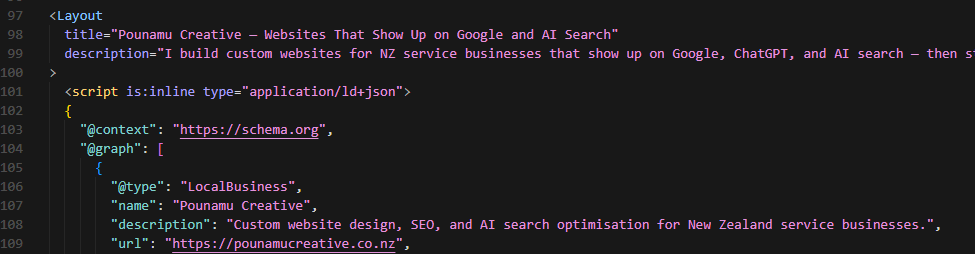
Google’s position: structured data is not required for generative AI search, and there is no AI-specific schema. Google names overfocusing on structured data as a myth in its own guidance.
What schema actually does is make you eligible for rich results in ordinary search, and give Google clean, unambiguous facts about a local business. That is reason enough to have it. The one hard rule is that your markup must match what the page visibly says — schema claiming things the page does not state is a problem rather than an advantage.
The one we got wrong
Every guide on this site about AI search was written in April 2026. Google’s current guidance on generative AI features was updated in June.
In that gap, two of our own pages made claims that are on the list above.
Our GEO guide stated that schema markup was “more important for GEO than it is for basic traditional SEO.” Our ChatGPT guide answered the question “do you need it?” with “yes, if you want to perform well in AI search.” Both of those are myth 5, published on our own website, on pages offering to sell the work.
Both guides also said AI tools prefer plain, conversational language, and that keyword-heavy writing works against AI visibility. That is myth 3. The advice was fine. The reason we gave for it was invented.
We corrected all of it in September 2026, after reading Google’s guidance properly rather than absorbing what the industry was repeating. The corrections are in this site’s public commit history if you ever want to check.
We are telling you this for two reasons. The first is that it would be absurd to publish a guide about unverified GEO claims while quietly having made some. The second is more useful to you: this is how easily it happens. Nobody at this end was being cynical. We read what everyone else was writing, it sounded right, and we repeated it with more confidence than the evidence supported. That is the ordinary way this stuff spreads — not fraud, just an industry citing itself in a loop.
Which is exactly why the next section is the most valuable part of this guide.
How to tell whether GEO advice is any good
Google published criteria for evaluating third-party SEO advice, tools and services. They are short, they are practical, and they work as a filter on anyone selling you anything — including us.
Good advice cites its source, or admits it is opinion. Google’s test is that advice either points to official Google guidance, or qualifies its claims as opinion based on the advisor’s own data and experience. Advice that asserts “what Google says” with no source behind it fails. If a proposal makes confident claims about how Google’s systems work, ask where that came from.
No third-party tool has access to Google’s ranking data. Google states this plainly. Tools cannot guarantee performance, and their predictions are their own inference. That does not make them useless — it makes their outputs estimates, and they should be described that way.
Google does not endorse anybody. Google states it does not evaluate or approve any third-party service. Any tool, agency or freelancer implying Google endorsement, certification or partnership for AI visibility work is making it up.
Search Console is the tool Google actually recommends. It is free, it is first-party, and as of June 2026 it is gaining AI-specific reporting — impressions, which of your pages appear in AI responses, and in which countries. A lot of what is currently sold as proprietary AI visibility tracking is about to be available from the source at no cost.
One more thing people get confused about
Google-Extended comes up in these conversations and is worth separating out properly, because it sounds like an AI search control and is not.
Google-Extended limits AI training and grounding in Google’s other systems, meaning Gemini. It does not control whether you appear in AI Overviews or AI Mode. Those are governed by the ordinary controls: robots.txt at the crawl level, and nosnippet, data-nosnippet, max-snippet or noindex at the display level.
The practical warning attached to that: a restrictive snippet setting removes you from the entire Google AI layer, silently. If somebody has been fiddling with these tags on your behalf, that is worth auditing before anything else. We cover the full technical baseline in what Google actually says about AI search visibility.
So what is actually worth paying for?
Stripping out everything above, the work that genuinely affects AI visibility is unglamorous and mostly familiar.
Being eligible at all. Indexed, snippet-eligible, crawlable by both robots.txt and your CDN, findable through internal links, with important content available as text. This is a hard prerequisite and it fails silently, which makes it the first thing to check and the last thing anyone thinks of.
Content only your business could have written. Google states unique, valuable content influences AI search presence more than any other suggestion in its guidance. Real jobs, real numbers, real opinions, first-hand experience. The generic explainer anyone could generate is the thing being filtered out, not rewarded.
Genuine local signals. A complete, current Google Business Profile — Google names it as a channel feeding local business information into AI responses — plus real reviews from real customers.
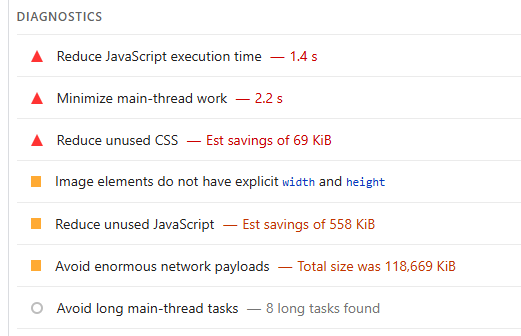
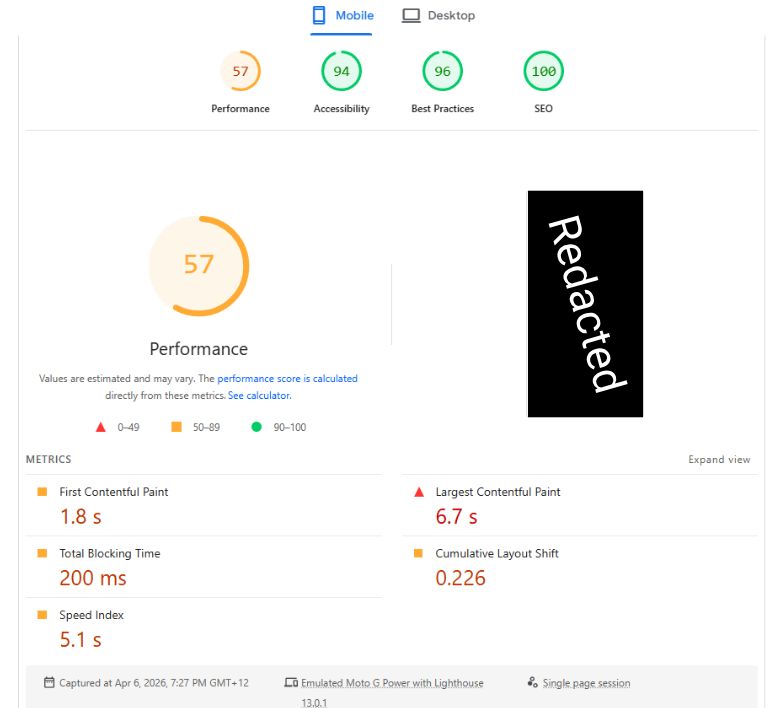
Sound technical foundations. Fast, mobile-first, stable. Not because speed is a magic ranking lever, but because it is part of the baseline everyone else is clearing.
Cross-platform work, described honestly. ChatGPT, Perplexity and Bing-grounded systems retrieve differently to Google, so presence in the sources they draw on is a real and separate job. Just be wary of anyone attributing Google AI visibility to tactics Google has explicitly ruled out.
None of that is exotic. It is mostly good SEO, done properly, by someone willing to tell you when a popular tactic is worthless.
Want the full picture of what Google has actually published? Read our guide: What is GEO? What Google actually says about AI search visibility
Choosing who to hire more generally? What should I look for when choosing a web designer in Nelson?
Or if you have a GEO proposal in front of you and want a second opinion on it:
Published by Pounamu Creative, Nelson NZ
Built to be found
Frequently asked questions
- Does llms.txt help my site appear in AI search?
- No. Google states that llms.txt and similar AI-specific files get no special treatment. Google may crawl such a file like any other file, but it does not affect visibility in AI Overviews or AI Mode.
- Do I need special schema markup for AI search?
- No. Google states structured data is not required for generative AI search and that there is no AI-specific schema. Schema is still worth having for rich results in ordinary search — just not as an AI lever.
- Should I break my content into small chunks for AI?
- There is no requirement to. Google states its systems understand multiple topics on one page and surface the relevant part, and that no ideal page length exists.
- How can I tell whether GEO advice is any good?
- Google published criteria for this. Good advice either cites official Google guidance or qualifies its claims as opinion based on data and experience. Anyone asserting what Google says without a source fails that test.
- Does Google endorse any GEO tools or agencies?
- No. Google states it does not evaluate or approve any third-party service. Any tool or agency implying Google endorsement is making it up.